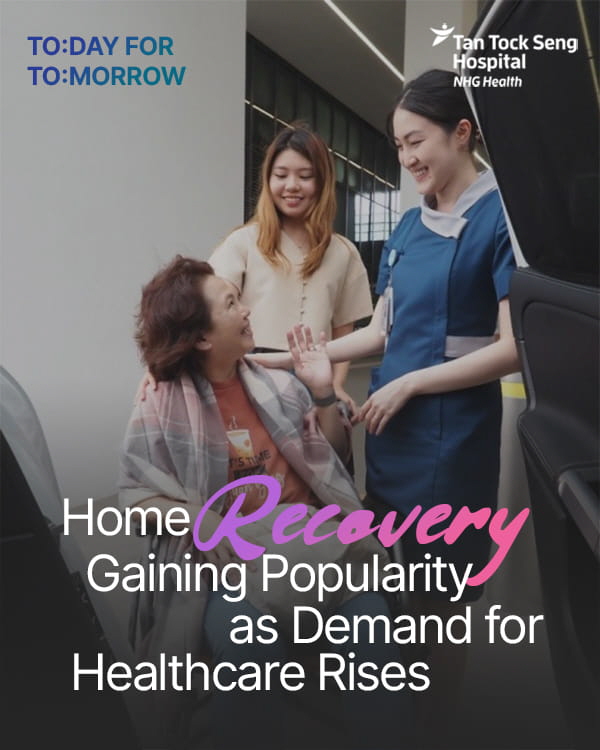
For 88 years-old Mr Choo Bok Lam, being able to recover from the comfort of his home feels a lot better than staying in a hospital ward. In 2025, he was admitted to Tan Tock Seng Hospital for a leg infection. However, as his case was deemed medically non-emergent, his care team offered him the option of receiving medical treatment from home through the
TTSH@Home programme.
“I feel more comfortable at home as I can move around freely, and not have to inconvenience the healthcare workers. I am getting the exact same treatment as though I am in a hospital – it is like turning my house into a ward," shared Mr Choo with
CNA 938 in an interview.
With the expected increase in Singapore's ageing population, it is estimated that more hospital beds are required to support the population. It is not viable to keep building new hospitals, therefore the concept of having “hospital beds" at home fits the need.
Recovering From Home
TTSH@Home caters to the preference of patients who seek comfort and familiarity when receiving care. As an alternative to conventional hospital stays, clinical services are delivered to medically suitable patients in their residences. TTSH's dedicated team of doctors, nurses, and allied health professionals ensures comprehensive care while monitoring patients remotely. In addition, the care model also benefits the recovery of patients where they can continue their daily lives (e.g. reading book, watching shows, enjoying home-cooked meals) all at the comfort of their homes. For those who wish to visit their loved ones, they do not need to detour out of the usual route (i.e. to a hospital) where there are restrictions of number of visitors at any given time and visiting hours.
Some of the patient profiles who are suitable to continue receiving care at home may have cellulitis, urinary tract infections, pneumonia, gastroenteritis, dengue fever, rhabdomyolysis, influenza, and viral fever. Other conditions, such as COVID-19 infections in patients with weakened immune systems, as well as post-operative care for selected patients following surgery, are also considered.
It Takes a Village to Coordinate Care at Home
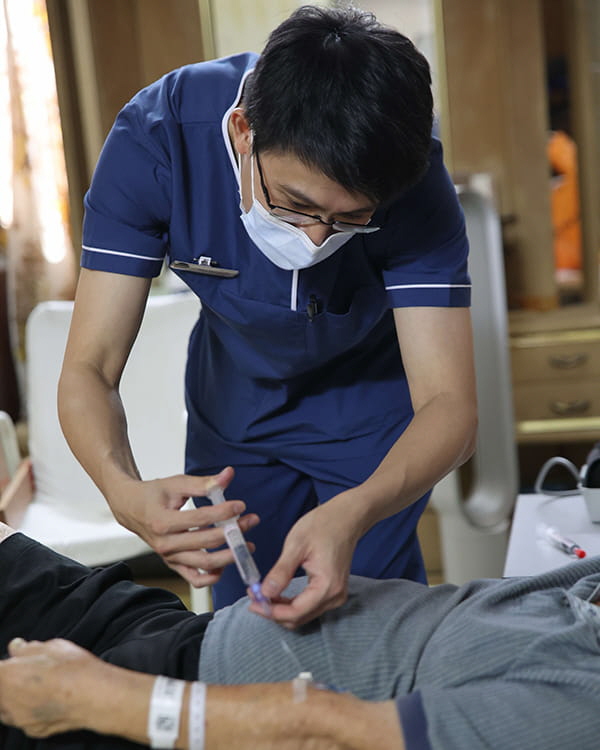
Mr Choo added, “Communication with the care team is convenient and done daily, where I am able to share with them any updates or challenges about managing my condition. The nurses come to my house daily to check in on me, and administer the necessary care procedure. The third-party service providers have also been very prompt every to deliver my medications, administer antibiotics drips and send my blood samples or x-rays to my primary care team at the hospital.
Commenting on the scale of coordination required in delivering seamless care for patients,
Dr Bao Minfang, Consultant for
Geriatric Medicine at TTSH, shared, “As the majority of care is delivered remotely, there is a lot of coordination involved in this care model. From loaning patients a vital sign kit (for the daily vital signs monitoring), delivery of medication during top-ups, arranging ambulances to return to hospital as needed and resource planning for home visits.
To support the coordinator work, the hospital introduces Coordinators to support the administrative coordination to offload these tasks from our doctors and nurses. There are also plans for the Coordinators to be upskilled to take on simple clinical tasks such as patient education on general care at home, management of IV cannula, use of vital signs etc.
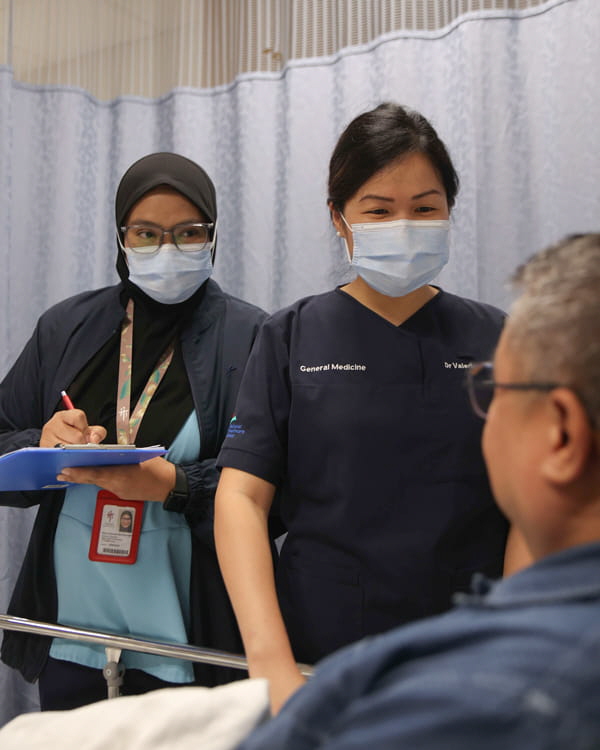
To maximise the resource planning for home visits which covers day and night, the hospital partners with dedicated third party service providers to deliver care, with aims to balance the varying number of home visits needed across the clock, as well as proximity so that patients have timely access to care."
Mr Choo added that he does notice some cost-saving through TTSH@Home, as he is only paying for the services rendered, and does not need to factor in the ward stay aspect of this care mode. Patients are eligible for
government subsidies and they can tap on MediShield Life & Medisave in line with the existing Acute Inpatient Financing Framework by the Ministry of Health (MOH).
Looking Ahead To The Future of Our Home Recovery Journey
Dr Bao added, “Scaling of the service is not linear process. The team is currently pacing its growth with demand closely to ensure that it continues to take in the right patient profile. Even as this service develops, there are also development in other service types that may enable those services to take higher 'acuity' patients. We also foresee the involvement of therapist services in the future, as a fundamental component of the care is to minimise patients' functional decline during the acute phase."
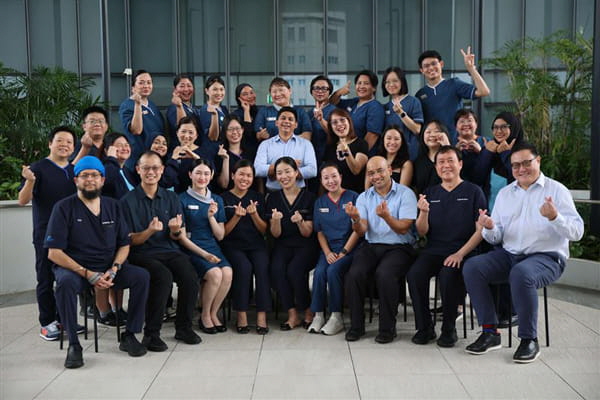
The team's dedication and pursuit in providing innovative and quality care for patients, while staying agile in navigating the complexities of the care model have earned them the Collaboration Award at the
Healthcare Humanity Awards in 2025.